

Data Audit
Organizations which are focused on Data Migrations / Data Quality and / or Data Governance, VRGT® Data Audit provides excellent Business-Quality data analysis and load ready data.
Data Audit is an activity which delivers user-specific reports that focus on findings, Identifying specific data challenges that are causing issues in day-to-day operations in about 2-3 weeks’ time.

Benefits:
- Identifying the data issues such as gaps, inaccuracies & processing errors and remediate them
- To improve data quality and process, work with business to define functional requirements
- Increase operational efficiency by comparing and optimizing environments
- Define workflow steps to reduce costs and accelerate process across environments
Data Migration
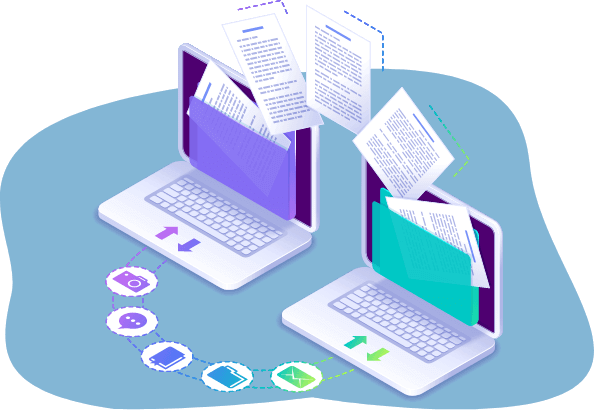
VRGT® Data Migration solution mitigates the risk of migration failure, delivers measurable business impacts and ensure alignment with your broader System Integration and Software Vendor initiatives.
We bring a powerful combination of methodology, technology and consultant expertise to deliver proven data migration success. We leverage our 20 years of data expertise that spans all data objects and business process models and employ a callable library of over 10,000 rich data quality analysis, reporting, connectivity and transformation elements. We migrate only the legacy data required to run your business and eliminate business-process interruptions.
Our Data Migration solution is unlike general-purpose data migration IT tools, which require extensive configuration and complete specifications for target system implementation prior to the initial data load. By utilizing our methodology we can achieve multiple initial loads prior to the completion of the blueprinting process in less time and with fewer consultants to get the job done. More frequent loads increase project “knowledge” during the blueprinting and refinement process. Our methodology, coupled with our tools and content, provides the highest degree of project visibility and accountability throughout the migration process. This allows us to align our methodology with your SI's ERP implementation strategy.
Our Data Migration guarantees operational and financial data readiness at go-live by providing data quality “visibility” during the early stages of the project rather than at the end.
Benefits:
- Early data quality visibility dramatically improves go-live readiness
- Our method eliminates spreadsheets by simplifying data mapping exercises and automating new data construction
- Processes
- Vast content library lowers cost of custom programming and rule creation
Data Governance
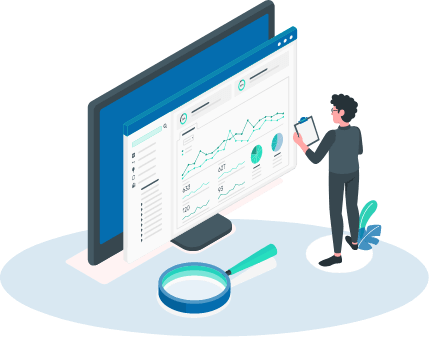
Data Governance is an emerging discipline with an evolving definition. The discipline embodies a convergence of data quality, data management, data policies, business process management, and risk management surrounding the handling of data in an organization. Through data governance, organizations are looking to exercise positive control over the processes and methods used by their data stewards and data custodians to handle data.
Data Governance is a set of processes that ensures that important data assets are formally managed throughout the enterprise. Data governance ensures that data can be trusted and that people can be made accountable for any adverse event that happens because of low data quality. It is about making people responsible for fixing and preventing issues with data so that the enterprise can become more efficient. Data governance also describes an evolutionary process for a company, altering the company’s way of thinking and setting up the processes to handle information so that it may be utilized by the entire organization. It’s about using technology when necessary in many forms to help aid the process. When companies desire, or are required, to gain control of their data, they empower their people, set up processes and get help from technology to do it.
Data governance encompasses the people, processes, and information technology required to create a consistent and proper handling of an organization's data across the business enterprise. Goals may be defined at all levels of the enterprise and doing so may aid in acceptance of processes by those who will use them.
Some goals include::
- Increasing consistency and confidence in decision making
- Decreasing the risk of regulatory fines
- Improving data security
- Maximizing the income generation potential of data
- Designating accountability for information quality
- Enable better planning by supervisory staff
- Minimizing or eliminating re-work
- Optimize staff effectiveness
- Establish process performance baselines to enable improvement efforts
- Acknowledge and hold all gains
Data Archiving
Data archiving allows for the long-term preservation and maintenance of information. It provides safe storage for mission-critical data that can be accessed whenever needed. The information remains available and the integrity of the data is protected once it has been preserved in the archived data management system.
The benefits and life expediencies of different data archiving methodology archiving strategies are different. One of the factors that determines the best archival data solution for your company is the amount of data being handled.
Data backup vs archiving
How you scan, describe, and then keep data for use; how simple it is to access; how long the data is held; and what your ultimate goals for that data are the differences between data backup and archiving.
Nexoft's cloud data archiving solution secures applications and data no matter where your systems are located. This ensures that your compliance obligations are met while also preventing costly company interruptions. Nexoft's secure data archiving is scalable, efficient, and simplifies and lowers expenses.
Benefits of data archiving
- Increased capacity – By archiving digital data, backup and recovery times are cut in half.
- Easier backup – Because you don't waste time storing up inactive data, data archiving strategies may help make backup procedures easier.
- Improved capacity to meet compliance needs – Data archiving requirements and best - practice may guarantee your business stays in compliance with applicable rules and the law, regardless of your industry or vertical.
- Increased productivity – Spend less time maintaining and monitoring on-site backup storage software and infrastructure.
- Higher growth – Even in businesses that create large volumes of data, a scalable, cost-effective cloud data archiving solution enables for a pay-as-you-go growth mode with less waste.
- Location management that is more sophisticated — Using a virtual data archiving solution saves money on workplace intranets and other costly equipment.